Jeremenko
Potentially thermally active
Coal heap (contains coal remains)
8.50
ha
0.40
mil. m³
1965 - 1990
Period
Layers
- Land use plan
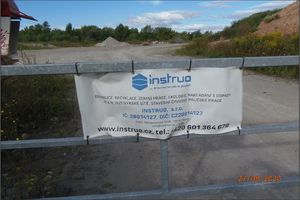
- According to the Land Use Plan of the City of Ostrava (map portal as of 14.8.2020), the area of the Jeremenko spoil heap is designated as areas with differing uses: - landscape greenery, territorial system of ecological stability, category regional biocentre RBC 2-14; - light industry, developable areas; - industrial waste dump – reclamation, forest. The company Instruo s.r.o. operates at the Jeremenko spoil heap and carries out recycling of construction and demolition waste there.
| Heap part | Cadastral unit | Parcels | Owner |
|---|---|---|---|
| Jeremenko | Kunčice nad Ostravicí (714224) | Česká republika, DIAMO, státní podnik, Máchova 201, 47127 Stráž pod Ralskem |
Jeremenko
- Volume
- 0.40 mil. m³
- Area
- 8.50 ha
- Period
- 1965 - 1990
- Transport technology
- By cableway, and from the terminal station of the cableway by trucks.
- Storage technology
- Flat-topped spoil heap
- Heap status
- Inactive
- Status description
- Inactive, partially reclaimed
- Reclamation
- Partially reclaimed
- Reclamation description
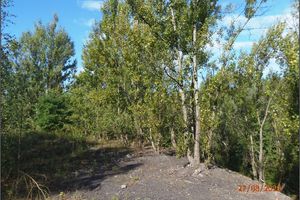
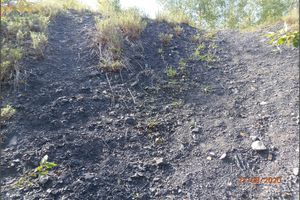
- After the use of the Jeremenko spoil heap ceased, the southern part and part of the western slope, including the western plot of land below the spoil heap, were reclaimed. The steep edges on the western and partly on the northern side of the spoil heap, in areas outside the mature vegetation, were leveled off, and the terrain was graded into gentle slopes leading up to the crown of the spoil heap. Currently, the slopes of the spoil heap are overgrown with volunteer (self-seeded) vegetation, with exposed waste rock occurring in places. Part of the newly planted conifers has died off.
- History description
- The Jeremenko spoil heap was established in 1965 at a location that had been devastated during 1948–1950 by the extraction of gravel-sand for the construction of Nová huť (New Ironworks). The terminal station of the cableway for transporting coal waste rock was on the right bank of the Ostravice River. From the terminal station, the waste rock was hauled to the spoil heap by trucks. The waste rock deposited at the spoil heap originated partly from the operation of the processing plant, and partly consisted of Carboniferous rocks mined from development/preparatory mine workings driven through the entire profile in rock strata without coal content. The processing plant was commissioned in 1964. The processing plant included a screening (sorting) facility, a washery, a wagon circuit, a stone-processing facility, a cableway, a stone spoil heap, sludge ponds, and a plant railway siding. The Jeremenko spoil heap was used for depositing waste rock from the operation of the Jeremenko Mine during the period 1965–1990. In 1992, remediation of a fire in the northeastern part of the spoil heap was carried out. The area of the fire was isolated by a cut (trench) down to the level of the original terrain, and the cut was filled with fly ash and water. The crown of the spoil heap and the slopes were covered with an insulating clay mantle. After the use of the spoil heap ceased, the southern part and part of the western slope, including the western plot of land below the spoil heap, were reclaimed. The steep edges on the western and partly on the northern side of the spoil heap, in areas outside the mature vegetation, were leveled off, and the terrain was graded into gentle slopes leading up to the crown of the spoil heap.
- Material composition
- Waste rock from development work, drivage, and processing plants – state the specific mine from which the coal waste rock was deposited, add the proportion of the main rock components, and if applicable the content of coal matter or combustible substances (and by which methodology it was determined). The coal waste rock deposited at the Jeremenko spoil heap was partly affected by thermal activity. The extent of the burnt-out and unburnt parts has not been verified. The grain size of the unburnt coal waste rock at the spoil heap reaches up to 200 mm. Coal waste rock was not mined/extracted at the Jeremenko spoil heap in the past, and no laboratory tests of the physical-mechanical properties of the waste rock have been carried out here.
- Thermal activity status
- Potentially thermally active
- Thermal activity description
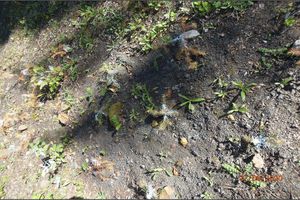
- In 1992, remediation of a fire in the northeastern part of the spoil heap was carried out. The area of the fire was isolated by a cut (trench) down to the level of the original terrain, and the cut was filled with fly ash and water. The crown of the spoil heap and the slopes were covered with an insulating clay mantle. The concentration of CO, as a basic indicator of the incomplete combustion process, was measured in 2010 in only three out of 9 probes and reached values of 2–23 ppm. Thermal measurements in 2010 showed a normal temperature (13.7–17.1°C) at a depth of 1 m below the ground surface, which corresponded to normal background temperature. The content of combustible substances in the coal waste rock was low, reaching up to 12.25–15.32% (Kresta – Hájovský 2011). No manifestations of thermal activity were found at the Jeremenko spoil heap in August 2020. At the Jeremenko spoil heap, manifestations of endogenous thermal activity were probably subsiding or had already subsided.
- Thermal monitoring
- Ano
- Monitoring description
- Thermal measurements in 2010 showed a normal temperature (13.7–17.1°C) at a depth of 1 m below the ground surface, which corresponded to normal background temperature. The content of combustible substances in the coal waste rock was low, reaching up to 12.25–15.32% (Kresta – Hájovský 2011). As part of the next stage of work, we recommend carrying out one round of thermal monitoring at the site.
- Recommendations - testing
- Coal waste rock testing – basic tests of coal waste rock are recommended, including determination of loss on ignition.
- Recommendations - monitoring
- A one-time (single) stage of thermal monitoring using aerial imaging/surveying is recommended.
- Remediation proposal
- Remediation of the thermally active part of the Jeremenko spoil heap took place in 1992. The area of the fire was isolated by a cut (trench) down to the level of the original terrain, and the cut was filled with fly ash and water. The crown of the spoil heap and the slopes were covered with an insulating clay mantle.
Kresta F., Hájovský J. (2011): FR-TI1/307 Výzkum termických procesů odvalů vzniklých při těžbě uhelných ložisek, vývoj metod a zařízení pro využití jejich termického potenciálu. Etapa X Pasportizace odvalů. Závěrečná zpráva. ARCADIS Geotechnika a.s., 01/2011.
Kresta F., Hájovský J. (2020): Klasifikace odvalů po těžbě uhlí (ÚMTO) na Ostravsku a Karvinsku. MS SG Geotechnika a.s., 09/2020.
Kresta F., Martinec P. (2025): Termické procesy v odvalech uhelné hlušiny. VŠB Technická univerzita Ostrava, 2025. 234 s., ISBN 978-80-248-4830-3
Information data quality:
High – On-site measurements, official documentation, professional studies, drone/UAV surveys, laboratory analysis, direct interviews, government databases
Geometric data accuracy:
High – GPS/GNSS field survey (RTK/PPK), drone survey, LiDAR scanning, cadastral survey, total station