Oskar
Potentially thermally active
Coal heap (contains coal remains)
13.22
ha
20.0
m height
1.44
mil. m³
1843 - 1976
Period
Layers
- Land use plan
- According to the Land Use Plan of the City of Ostrava (map portal as of 14.8.2020), the area of the Oskar spoil heap is designated as areas with differing uses, forest. The Oskar spoil heap falls within the territorial system of ecological stability, category local biocentre MBC 4-7.
| Heap part | Cadastral unit | Parcels | Owner |
|---|---|---|---|
| Oskar | Heřmanice (714691) | 164/1, 158/1, 158/4 | Asental Land, s.r.o., Gregorova 2582/3, Moravská Ostrava, 70200 Ostrava |
| Oskar | Heřmanice (714691) | 164/3 | Česká republika, Lesy České republiky, s.p., Přemyslova 1106/19, Nový Hradec Králové, 50008 Hradec Králové |
| Oskar | Heřmanice (714691) | 167/2, 158/5 | Skýba Ladislav Ing., Záblatská 273/20, Heřmanice, 71300 Ostrava |
Oskar
- Volume
- 1.44 mil. m³
- Area
- 13.22 ha
- Max. height
- 20.0 m
- Period
- 1843 - 1976
- Heap status
- Inactive
- Status description
- Inactive, partially reclaimed
- Reclamation
- Partially reclaimed
- Reclamation description
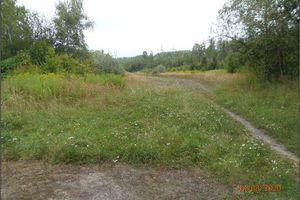
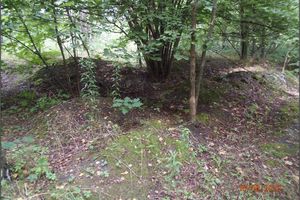
- The Oskar spoil heap was reclaimed in the past. It is covered with dense tree and herbaceous vegetation. The surface terrain is irregular. Part of the crown is only grassed. The foot of the spoil heap is waterlogged in some places. All infrastructure of the former mine along the northern edge of the spoil heap has been removed in the past. The spoil heap is not fenced. Part of the spoil heap is occasionally used for illegal cyclocross or motocross activities.
- History description
- The Oskar spoil heap represents a tabular (table-shaped) spoil heap, with its crown at the level of the former mine plant. The technology of depositing coal waste rock at the spoil heap consisted of tipping from mine tubs (mine cars). Transport of the mined-out material was carried out by mine tubs along a narrow-gauge, relocatable track. Waste rock from shaft-sinking and opening-up works was probably deposited here as early as 1843, when the sinking of the Oskar shaft began. The spoil heap served for depositing waste rock from the opening-up works (probably also from development work) of the Oskar Mine, and after the merger with the Petr Cingr Mine, mined material from that site was also transported to the spoil heap. After the operation of the Petr Cingr Mine was discontinued in 1976 and it was converted into a ventilation shaft, the operation of the spoil-heap management also ended. The spoil heap was gradually reclaimed and shaped into its present-day form. Currently, the spoil heap is largely overgrown with volunteer (self-seeded) woody vegetation; part of the spoil heap has a red-shale (antuka) sports pitch, and fruit trees have been planted there.
- Material composition
- On the spoil heap there are a number of loosely deposited piles of waste rock containing coal (Poruba and Hrušov beds/layers). Unburnt coal waste rock is deposited at the Oskar spoil heap. Coal waste rock was not mined/extracted at the spoil heap in the past. Likewise, no laboratory tests to verify its physical-mechanical properties have been carried out here. The content of combustible substances in the coal waste rock was variable and reached up to 40.42% in one sample (Kresta – Hájovský 2011).
- Thermal activity status
- Potentially thermally active
- Thermal activity description
- No thermal activity was recorded at the Oskar spoil heap in the past. Likewise, at present (08/2010) this activity is not manifesting. During orientation/preliminary temperature monitoring in 2010, temperatures of 12.3–15.3°C were found at a depth of 1 m below the ground surface, which corresponds to normal background temperature. Non-zero values of carbon monoxide content (5–82 ppm) were also found (Kresta – Hájovský 2011). Given the isolated higher contents of combustible substances in the coal waste rock (40.42% in one sample) and the non-zero carbon monoxide contents, subsiding thermal activity at the spoil heap cannot be ruled out (Kresta – Hájovský 2011). No manifestations of thermal activity were found at the Oskar spoil heap in 08/2020.
- Thermal monitoring
- Ano
- Monitoring description
- During orientation/preliminary temperature monitoring in 2010, temperatures of 12.3–15.3°C were found at a depth of 1 m below the ground surface, which corresponds to normal background temperature. Non-zero values of carbon monoxide content (5–82 ppm) were also found (Kresta – Hájovský 2011). Given the isolated higher contents of combustible substances in the coal waste rock (40.42% in one sample) and the non-zero carbon monoxide contents, subsiding thermal activity at the spoil heap cannot be ruled out (Kresta – Hájovský 2011). As part of the next stage of work, we recommend carrying out one round of thermal monitoring at the site.
- Recommendations - testing
- Basic tests of coal waste rock are recommended, including determination of loss on ignition.
- Recommendations - monitoring
- A one-time (single) stage of thermal monitoring using aerial imaging/surveying is recommended.
- Remediation proposal
- Remediation of the Oskar spoil heap took place in the 1990s.
Kresta F., Hájovský J. (2011): FR-TI1/307 Výzkum termických procesů odvalů vzniklých při těžbě uhelných ložisek, vývoj metod a zařízení pro využití jejich termického potenciálu. Etapa X Pasportizace odvalů. Závěrečná zpráva. ARCADIS Geotechnika a.s., 01/2011.
Kresta F., Hájovský J. (2020): Klasifikace odvalů po těžbě uhlí (ÚMTO) na Ostravsku a Karvinsku. MS SG Geotechnika a.s., 09/2020.
Kresta F., Martinec P. (2025): Termické procesy v odvalech uhelné hlušiny. VŠB Technická univerzita Ostrava, 2025. 234 s., ISBN 978-80-248-4830-3
Information data quality:
High – On-site measurements, official documentation, professional studies, drone/UAV surveys, laboratory analysis, direct interviews, government databases
Geometric data accuracy:
High – GPS/GNSS field survey (RTK/PPK), drone survey, LiDAR scanning, cadastral survey, total station